
What Is a Knife Valve? Applications, Design and Selection Notes
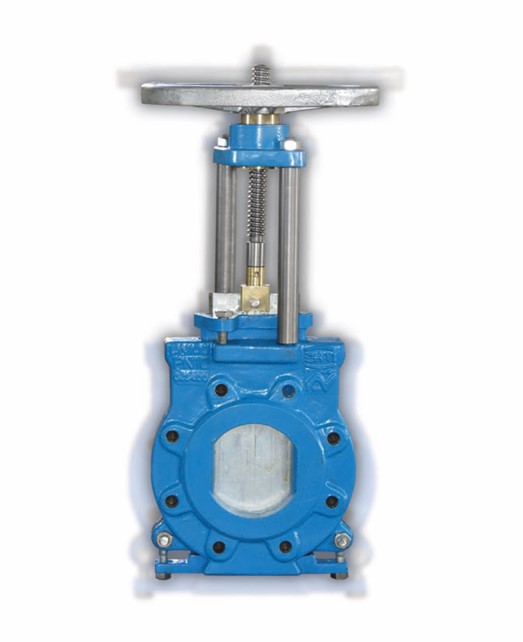
A knife valve is an isolation valve used in pipelines where the medium may contain suspended solids, sludge, slurry, viscous fluids or waste streams. Unlike general isolation valves used mainly for clean water or neutral fluids, a knife valve is often selected when the flow condition is more difficult and the valve needs to isolate media that may be thick, sticky or mixed with solid particles.
The main function of a knife valve is isolation. It is not primarily used for precise flow control. In most applications, the valve is either open or closed. When open, the flow path should allow the medium to pass with minimum obstruction. When closed, the blade moves into the flow path and isolates the line.
How a Knife Valve Works
A knife valve uses a blade or gate that moves upward and downward to open or close the flow path. In the open position, the blade is lifted away from the flow area. In the closed position, the blade moves downward and blocks the passage of the medium.
The blade movement is important because many knife valve applications involve fluids that are not clean or low-viscosity. In media such as slurry, sludge, chemical sludge, sugar paste or waste streams, the valve design must reduce unnecessary contact between moving parts and help the blade move without excessive friction.
In the Knife Valve PN 6/10 product data, the valve is described with full uplift movement to help passing solid materials, blade isolation by a packing layer and minimum contact between moving parts. These are important design points for applications where the medium may include suspended solids or sticky materials.
Common Applications
Knife valves are commonly used in industrial systems where the medium is more difficult than clean water. Typical applications include:
Food and drink industries
Chemical industries
Dough-making industries
Paper mache and high-viscosity liquid production lines
Clammy liquids and sugar paste
Waste streams and chemical sludge
Thermal power plants
In these applications, the valve is selected because the line may carry viscous fluids, sticky media, sludge, slurry or solid-containing flow. The purpose is to isolate the line for operation, inspection or maintenance.
A knife valve can be useful where a standard gate valve may face difficulties due to deposits, sticky materials or suspended solids. However, final valve selection should always depend on the actual fluid, pressure rating, operating temperature, flange compatibility and required isolation performance.
Knife Valve vs Gate Valve
A knife valve and a gate valve are both used for isolation, but they are not the same in application.
A gate valve is usually used in waterworks, industrial utility lines and general pipelines where the medium is relatively clean or non-corrosive. Gate valves are common in water supply networks, wastewater systems, irrigation systems and many industrial installations.
A knife valve is usually selected for more difficult media. These may include slurry, sludge, viscous fluids, sugar paste, chemical sludge and industrial waste streams. The blade movement and packing arrangement are important because the valve must operate in conditions where deposits or solids may be present.
In simple terms, a gate valve is often suitable for general isolation service, while a knife valve is more application-specific and is often used where the medium is thick, sticky or contains solids.
Key Selection Factors
When selecting a knife valve, the product name alone is not enough. Several technical factors should be checked before use.
Pressure Rating
The pressure rating defines the pressure class of the valve. For Knife Valve PN 6/10, the pressure rating is PN 6/10. This should be checked against the actual system pressure before selection.
Medium Type
The type of medium is one of the most important selection points. Knife valves may be used for viscous fluids, sludge, slurry, chemical sludge, sugar paste and waste streams, but material compatibility must be checked carefully, especially in corrosive or abrasive service.
Flange Compatibility
The valve should be compatible with the pipeline flange standard. For Knife Valve PN 6/10, flange dimensions are mentioned according to EN 1092-P2 / DIN 2501. Before installation, the flange drilling and dimensions should be checked against the pipeline.
Test Standard
Testing is important for industrial valves because it confirms basic pressure and sealing performance. For this product, the catalog mentions test pressure according to EN 12266-P1.
Blade and Packing Arrangement
The blade movement and packing layer affect the valve’s isolation behavior and maintenance requirements. The catalog describes blade isolation by a packing layer and easy blade movement upward and downward without contacting the valve body.
Operating Conditions
Temperature, fluid viscosity, suspended solids, installation position and maintenance access should be reviewed before final selection.
Installation Considerations
Knife Valve PN 6/10 is installed between two flanged pipes. Before installation, the flange dimensions should be checked according to EN 1092-P2 / DIN 2501. The valve should be positioned so that the blade movement remains smooth and the packing area can be inspected when needed.
The installation should also consider access for operation and maintenance. If the valve is installed in a difficult location, there should still be enough space around the handwheel, blade movement area and packing section.
The pipeline should be checked for alignment before installation. Poor alignment between flanges can create mechanical stress on the valve body and may affect long-term operation.
Maintenance Considerations
Maintenance should focus on blade movement, packing condition, sealing performance and the presence of deposits around the flow path. Since knife valves may operate with sticky or solid-containing media, regular inspection can help prevent operating problems.
The blade should move upward and downward without abnormal resistance. If movement becomes difficult, the cause may be related to deposits, packing condition, mechanical misalignment or medium build-up around the flow area.
The packing layer should also be inspected periodically. Packing condition can affect isolation performance and the movement of the blade.
Related Product
For technical product data, specifications and catalog-based details, see:
Knife Valve PN 6/10 technical product data
Use this product page when checking pressure rating, flange standard, test standard, applications and design features for this specific valve.
FAQ
What is a knife valve used for?
A knife valve is used for isolation service in lines carrying viscous fluids, slurry, sludge, chemical sludge, sugar paste, waste streams and similar industrial media.
Is a knife valve the same as a gate valve?
No. Both can be used for isolation, but a knife valve is usually selected for more difficult media such as slurry, sludge, sticky fluids or solid-containing flow, while gate valves are more common in general waterworks and industrial utility lines.
Can a knife valve be used with solid-containing media?
Yes, depending on the application and valve design. The Knife Valve PN 6/10 catalog mentions full uplift movement to help passing solid materials.
What should be checked before selecting a knife valve?
Pressure rating, medium type, viscosity, suspended solids, flange compatibility, test standard, material compatibility, operating temperature and maintenance access should be checked before final selection.
Which standard is mentioned for flange dimensions?
For Knife Valve PN 6/10, flange dimensions are mentioned according to EN 1092-P2 / DIN 2501.
Which test standard is mentioned for Knife Valve PN 6/10?
The catalog mentions test pressure according to EN 12266-P1.